
Who Looks After the Dogs Who Look After Us? New Study Reveals Welfare Research Gap

Researchers from Austria and Italy find that scientific tools for assessing assistance-dog welfare remain surprisingly limited, particularly before training and after retirement.
Assistance dogs help people with disabilities live more independent lives, guiding them through busy streets, retrieving objects and performing countless other essential tasks. But how carefully do we measure the well-being of the dogs themselves? A new scientific review from researchers in Austria and Italy has uncovered a significant gap in the evidence. Of 396 research records initially identified, only eight studies met the researchers’ criteria for examining how assistance-dog welfare is assessed. Their findings suggest that, despite the vital work these animals perform, scientists still lack widely applicable methods for evaluating their welfare throughout their lives. frontiersin.org
The Dogs Behind the Assistance
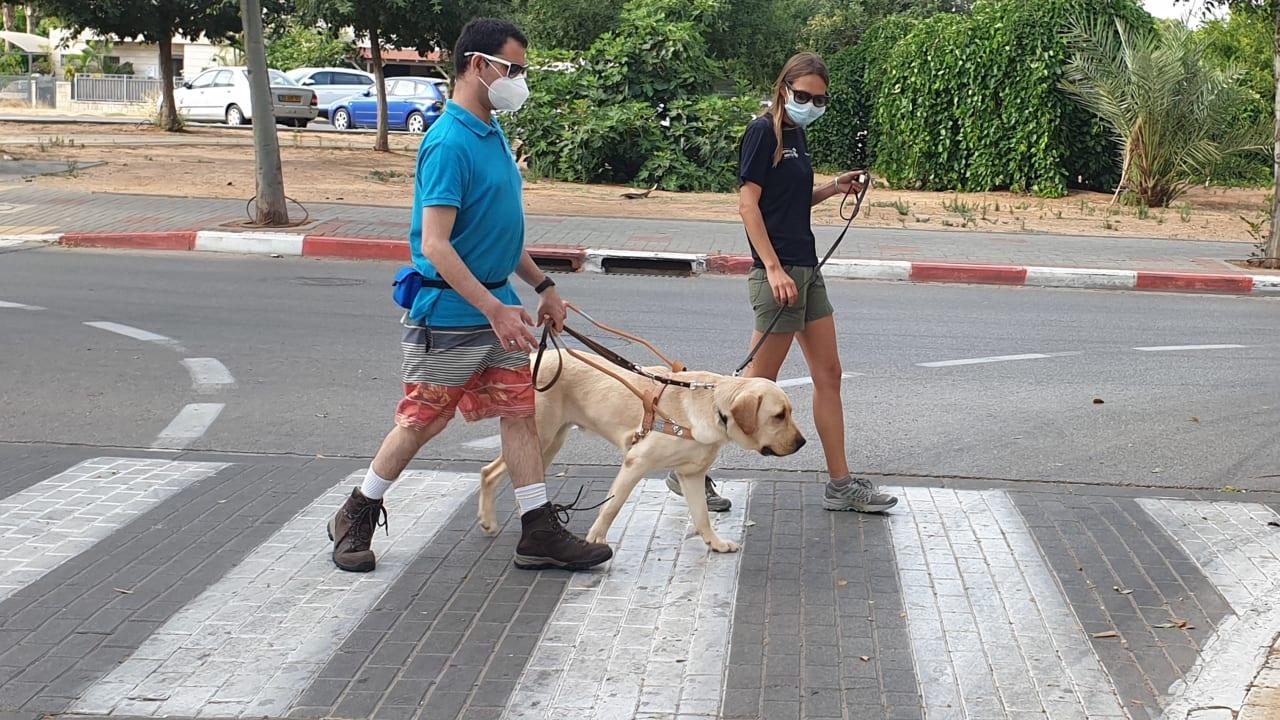
Assistance dogs perform a remarkable range of tasks. Guide dogs help people with visual impairments navigate their surroundings, while other assistance dogs may retrieve dropped objects, open doors or provide support with daily activities.Their work requires extensive training, close cooperation with their handlers and the ability to respond appropriately in unfamiliar environments. Unlike most companion dogs, they may regularly encounter crowded public spaces, noisy transport systems and demanding working schedules.
These responsibilities make their welfare particularly important. A dog may perform its tasks successfully while still experiencing stress, fatigue or discomfort that is not immediately obvious.The researchers wanted to understand whether existing scientific methods can reliably identify such problems and recognise signs of positive well-being.
Hundreds of Records, Just Eight Studies
The research team included scientists from the University of Veterinary Medicine Vienna and Italy’s Experimental Zooprophylactic Institute of the Venezie.They conducted a scoping review, a type of research that maps existing scientific evidence rather than testing a new treatment or intervention.
Using the Scopus and Web of Science databases, the researchers initially identified 396 records. After removing duplicates, 249 records were screened. Only eight studies met all the inclusion criteria.To qualify, studies had to examine assistance-dog welfare using observable indicators related to the animals themselves or their environments. Studies relying exclusively on physiological measurements were excluded.Most of the eight qualifying studies had appeared since 2021, and the majority concerned guide dogs.
The small number does not mean that assistance-dog organisations never monitor welfare. Instead, it demonstrates how little published research meets these particular scientific criteria. frontiersin.org
A Dog’s Entire Life Matters
One of the review’s most striking findings concerned the different stages of an assistance dog’s life.The included studies focused mainly on dogs undergoing training or already working with their handlers. None examined puppies before the beginning of formal training or retired assistance dogs. Yet these stages also matter.
Young dogs may experience major changes as they move between breeders, puppy raisers and training centres. They must learn to cope with unfamiliar situations while developing physically and socially. At the other end of their careers, retired assistance dogs face another important transition. They may leave a familiar working routine, experience age-related health problems or move into a different living arrangement. The researchers argue that welfare assessment should cover these transitions, rather than concentrating almost entirely on active working life.
Measuring Stress Is Not Enough
The review identified two main approaches to welfare assessment. Some studies relied on questionnaires completed by handlers, family members or assistance-dog organisations. Others involved researchers directly observing and recording the dogs’ behaviour. Both methods can provide useful information, but each has limitations. A handler may recognise subtle changes in a familiar dog’s behaviour, while independent observation can provide a different perspective.
The researchers also found that assessments concentrated heavily on behaviours associated with stress. Signs of positive emotional states received much less attention. This distinction is important. Good animal welfare involves more than simply avoiding suffering. Dogs should also have opportunities for enjoyable activities, comfortable rest, positive social experiences and behaviour appropriate to their individual needs. A dog that shows few obvious signs of stress is not necessarily experiencing the best possible quality of life.
Towards Better Welfare Assessment
The authors recommend developing methods based on the Five Domains Model, an established animal-welfare framework. This approach considers nutrition, physical environment, health and behavioural interactions, together with the animal’s overall mental experience. For assistance dogs, assessments would also need to reflect individual circumstances. A dog working in a busy city may encounter different challenges from one assisting a person mainly at home.
The dog’s age, health, temperament, training stage and relationship with its handler could all influence its welfare. Only one of the eight reviewed studies described a tool developed specifically for practical assistance-dog welfare assessment. The researchers therefore call for methods that are scientifically reliable but also realistic for trainers, organisations and handlers to use regularly.
What the Findings Do — and Do Not — Mean
The review does not establish that assistance dogs generally experience poor welfare. Nor does it demonstrate that existing training organisations are neglecting their animals. Its central finding is a shortage of published, directly applicable scientific assessment methods. The researchers acknowledge that useful practical knowledge may already exist within individual assistance-dog organisations without appearing in peer-reviewed publications.
Their review was also limited to English-language scientific studies and specific types of welfare indicators. Consequently, it cannot represent every welfare-monitoring practice used internationally. Nevertheless, the findings identify an important opportunity to improve how working dogs are supported.
Caring for Those Who Care
Assistance dogs contribute enormously to the independence and everyday lives of the people they support. Their work depends on trust, cooperation and a close relationship with their handlers. Protecting their welfare should therefore be a continuous responsibility, from their earliest development through training, working life and retirement. The new review offers no simple checklist that can immediately solve every problem. Instead, it provides a scientific starting point for developing better tools.
Its underlying message is straightforward: the dogs who spend their lives helping people deserve welfare assessments that recognise them as individuals with needs, preferences and experiences of their own.
source
Bassan, E., De Santis, M., Contalbrigo, L., Weissenbacher, K., and Huber, L. (2026).
Caring for those who care: A scoping review of existing welfare assessment tools for assistance dogs.
Frontiers in Veterinary Science, Volume 13, Article 2015155.
Published: 12 November 2026.
DOI: 10.3389/fvets.2026.2015155.Read the original peer-reviewed scientific paper
The publisher’s abstract and journal record confirm the authors, publication date, screening numbers, eight included studies, principal findings and limitations. The paper is open access under CC BY. frontiersin.org