

Why Do Chihuahuas Have Soft Spots in Their Skulls? New Study Offers Clues

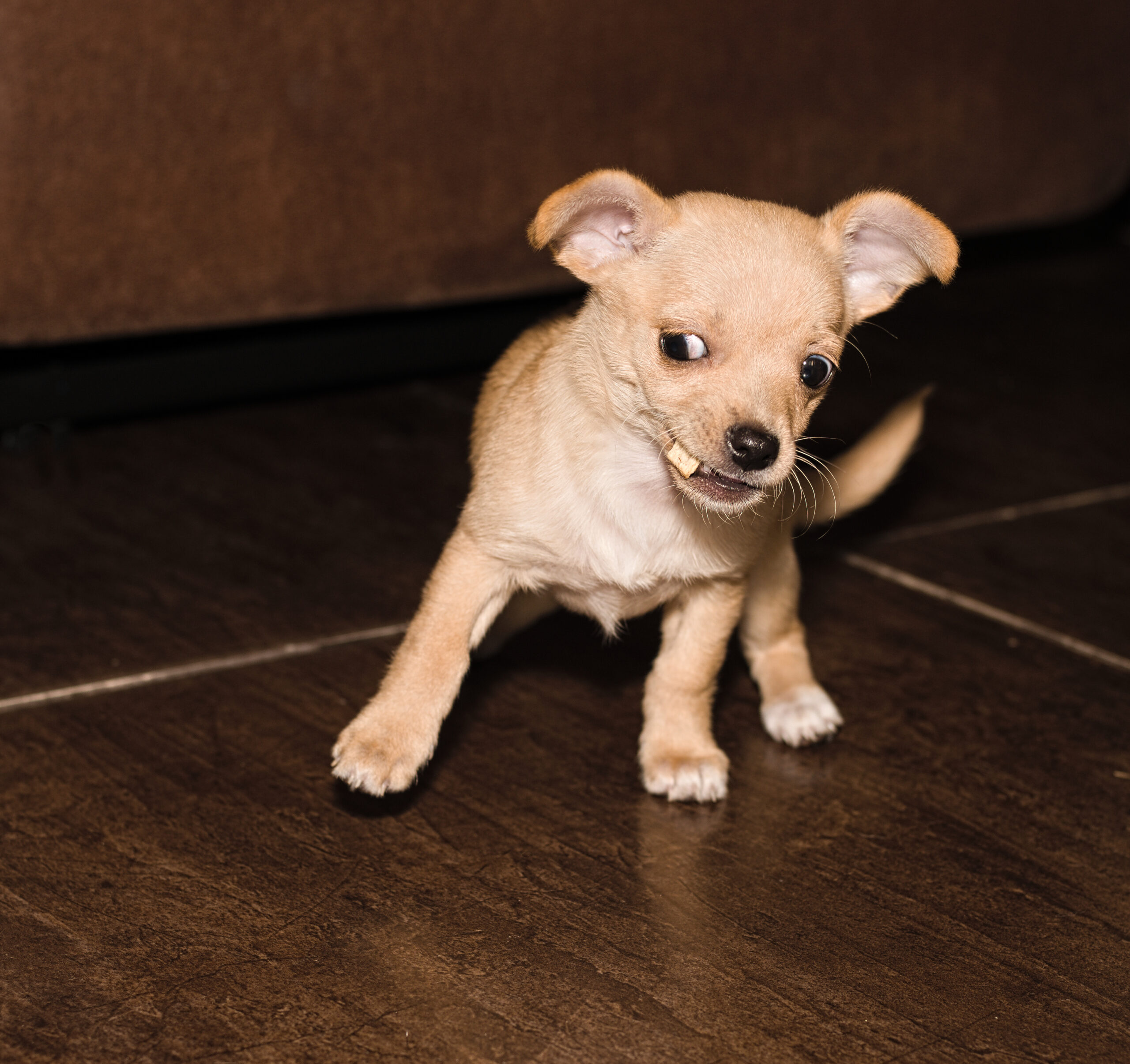
Chihuahuas are famous for their tiny bodies, large eyes and rounded heads. But beneath that distinctive appearance lies a feature that has puzzled veterinary researchers for years: small openings in the bones of the skull. A new Finnish study suggests that some of these openings may develop as puppies grow, rather than being present when they are born. The discovery could help scientists better understand skull development and neurological problems associated with certain small dog breeds.
A Small Dog With an Unusual Skull
Many Chihuahua owners have heard of the molera, a soft spot sometimes found on the top of the dog’s head.Veterinarians call such openings fontanelles. They are areas where the bones of the skull have not completely joined together.Fontanelles are normal during early development. They allow the skull to change shape during birth and provide space for the growing brain.
In most dogs, these openings close as the skull develops. However, Chihuahuas frequently retain one or more fontanelles into adulthood.Researchers have previously associated persistent skull openings in Chihuahuas with certain neurological abnormalities, including conditions affecting the brain and spinal cord.What remained unclear was whether these openings were already present at birth or appeared later during growth.Scientists at the University of Helsinki have now investigated that question in a study published on 20 October 2026.
Fifty Puppies Examined
The Finnish research team examined 50 newborn puppies, including 24 Chihuahuas and 26 puppies from breeds with less shortened skulls.The comparison group included Collies, Labrador Retrievers, German Shepherds and several other breeds.All the puppies had died naturally during birth or shortly afterwards, or had been euthanised for clinical reasons. No puppies were killed specifically for the research.
The scientists used computed tomography (CT) scans and highly detailed micro-CT imaging to examine the skulls.They also studied tissue samples under a microscope to distinguish genuine openings from areas where bone formation was still progressing normally.This combination of methods allowed the researchers to investigate skull development in considerably greater detail than ordinary external examinations.
A Striking Difference Between Breeds
One of the clearest findings concerned an opening near the top of the skull, known as the bregmatic fontanelle.Among the puppies with sufficiently complete examinations, all 19 Chihuahuas had at least one cranial fontanelle.By comparison, only six of 21 puppies from the other breeds had such an opening.The Chihuahua openings were also relatively wider. However, the researchers discovered something unexpected.
Although adult Chihuahuas commonly have several persistent openings in different parts of their skulls, almost all the newborn Chihuahuas had only one. Just one Chihuahua puppy had additional fontanelles elsewhere in the skull. This difference between newborn and adult dogs raises an intriguing possibility: some skull openings may develop after birth, while the bones are growing and changing shape. Frontiers
Could the Growing Brain Influence the Skull?
The researchers suggest that changes in skull development may help explain the findings.Chihuahuas have relatively short, broad and rounded skulls. Scientists describe this head shape as brachycephalic. The new study found that these characteristics were already present in newborn Chihuahua puppies.Furthermore, puppies with shorter and higher skulls tended to have relatively wider openings at the top of their heads.
As puppies grow, their brains expand rapidly. The surrounding skull must develop to accommodate that growth.The researchers propose that changes in bone formation and the gradual breakdown and rebuilding of existing bone could contribute to openings appearing in certain areas.However, this remains a hypothesis.The study examined puppies at a single early stage of life rather than following the same animals through development.Further research will be needed to establish whether skull openings actually appear during growth and what biological processes cause them.
Why Skull Shape Matters for Dog Health
The findings may have implications beyond understanding an unusual anatomical feature.Previous research has linked persistent fontanelles in adult Chihuahuas with abnormalities involving the brain, spinal cord and the area where the skull connects to the neck. One condition of particular concern is syringomyelia, in which fluid-filled cavities develop within the spinal cord.
Such abnormalities can sometimes cause pain and neurological symptoms.Nevertheless, an open fontanelle does not automatically mean that a dog has a neurological disorder.The new research did not investigate whether the newborn puppies would have developed medical problems later in life.Nor does it establish that every Chihuahua with a rounded head will experience health difficulties.Instead, it provides new information about how skull shape and bone development may be connected.
What Does This Mean for Chihuahua Owners?
For owners, the findings are interesting but do not immediately change routine veterinary care.A Chihuahua with a persistent soft spot is not necessarily unhealthy. However, concerns about skull abnormalities or neurological symptoms should be discussed with a veterinarian.The study also raises questions about breeding preferences.
Chihuahuas have long been bred for their small size and characteristic rounded heads. The researchers note that selecting for particular physical features could influence how skull bones develop.Understanding those relationships may eventually help breeders and veterinarians make better-informed decisions.The authors acknowledge several limitations, including the relatively small number of puppies examined and differences between the breeds in the comparison group.Nevertheless, their findings provide an important starting point for future investigations.The next challenge will be to follow skull development throughout puppyhood and determine why certain openings persist or appear later.For one of the world’s smallest dog breeds, the answers could make a meaningful difference to future canine health research.
Primary Scientific Sources
1. Original peer-reviewed research — Published 20 October 2026
Rautala, E., Malkamäki, S., Jokinen, T. S., Leikola, J., Ruohoniemi, M., Junnila, J. J. T., & Kiviranta, A.-M. (2026).
Cranial fontanelles and the association of bregmatic fontanelle width with cranial morphology in newborn Chihuahua and non-brachycephalic puppies.
Frontiers in Veterinary Science, Volume 13.
DOI: 10.3389/fvets.2026.1922844
Read the complete original scientific paper
2. Earlier research on persistent fontanelles
Kiviranta, A.-M., et al. (2021).
Persistent fontanelles in Chihuahuas. Part I: Distribution and clinical relevance.
Journal of Veterinary Internal Medicine.
Original research on persistent fontanelles
3. Earlier research on skull shape
Rautala, E., et al. (2025).
Association of Extreme Brachycephaly with Persistent Fontanelles in Adult Chihuahuas.
Journal of Veterinary Internal Medicine.
The 2026 study builds on this earlier work by examining skull development at birth rather than in adult dogs.