
New Study Finds Older Beagles Respond Faster After Hormone Treatment

Researchers report improved performance in cognitive tests, but caution that faster responses do not necessarily mean better memory.
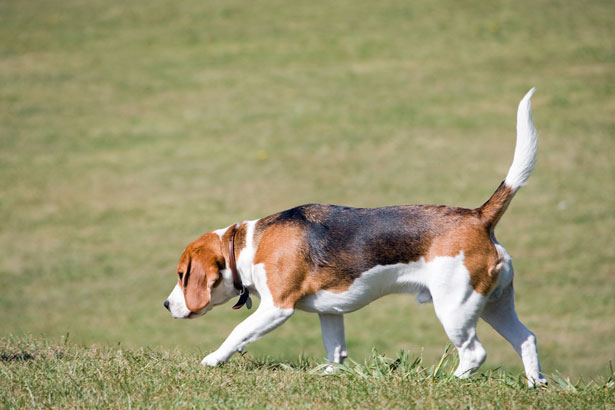
Could a treatment targeting the biology of aging help older dogs remain mentally active? A new study involving 28 senior Beagles suggests that changing the activity of certain growth-related hormones may improve how quickly aging dogs respond to challenging tasks. Researchers found that dogs receiving a medication called octreotide performed faster in several cognitive tests than dogs given a placebo. However, the treatment did not consistently improve their ability to make correct choices, meaning the findings are encouraging but far from proving that the drug can prevent or treat canine dementia.
Understanding the Aging Canine Brain
As dogs grow older, their brains undergo changes that can affect learning, memory, attention and behaviour. Some develop canine cognitive dysfunction, a condition sometimes compared with Alzheimer’s disease in humans.
Affected dogs may become disoriented, experience disturbed sleeping patterns, forget familiar routines or show changes in their interactions with people. Although not every older dog develops these problems, cognitive decline can significantly affect an animal’s quality of life.
Scientists have therefore become increasingly interested in understanding the biological processes responsible for brain aging.
One area of investigation involves growth hormone and insulin-like growth factor 1, usually called IGF-1. These substances play important roles in growth and metabolism, but their activity may also influence how animals age.
Previous studies in laboratory animals have suggested that reducing certain growth-related signals can sometimes protect against age-related changes. Whether similar approaches could benefit naturally aging dogs remains an important scientific question.
Twenty-Eight Beagles Put to the Test
Researchers working for the American animal-health company Loyal Animal Health investigated this question using 28 Beagles aged between seven and fifteen years.
The dogs were already familiar with cognitive testing. Before treatment began, researchers assessed their performance on tasks designed to measure attention, flexibility in learning and short-term spatial memory.
The animals were then divided into two groups of fourteen. One group received a long-acting injection of octreotide, a medication that suppresses growth hormone activity and influences IGF-1 levels. The other group received a placebo.
After an initial adjustment period, the researchers repeated the cognitive tests over several weeks.
One task required dogs to recognise a previously rewarded object and then adapt when the rules changed. Another introduced distracting objects, testing whether the animals could concentrate on the correct choice.
A third task examined spatial working memory by asking dogs to remember the location of an object after a short delay.
These tests allowed the researchers to investigate different aspects of cognitive performance rather than relying on a single measure.
Faster Responses, but Not Better Accuracy
The most interesting results concerned the speed at which the dogs responded.
Animals receiving octreotide generally made decisions more quickly in several tests. They were also less likely to fail to respond when faced with a task in which the previously rewarded choice was no longer correct.
The researchers observed particularly encouraging results among dogs that had performed less well during their initial assessments.
Blood testing confirmed that the treatment affected the intended hormonal pathway. On day 27 after administration, the treated dogs showed an average reduction of approximately 29% in circulating IGF-1 concentrations.
However, there was an important limitation.
Although treated dogs often responded faster, they did not consistently make more correct choices than the placebo group. Their memory accuracy and overall success rates were not significantly better across the tests.
This distinction matters because responding more quickly is not necessarily the same as remembering more information or learning more effectively.
The treatment may have influenced attention, motivation or willingness to participate rather than directly improving memory.
Why Scientists Are Interested
Despite these limitations, the results provide useful information about the relationship between hormones and brain function.
The researchers suggest that adjusting growth-related signalling may influence how efficiently older dogs process information and respond to demanding situations.
This could eventually contribute to research into treatments intended to preserve cognitive function during aging.
Dogs are particularly interesting to scientists because they naturally develop several age-related conditions also found in humans. Their relatively short lifespans also allow researchers to study aging over a more manageable period.
Nevertheless, the current study does not establish that octreotide slows brain aging, prevents dementia or extends canine lifespan.
It demonstrates a measurable difference in certain laboratory tasks following treatment, which is an important but much narrower finding.
Important Questions Remain
The research has several limitations. Only 28 dogs participated, and all were Beagles accustomed to laboratory cognitive testing. The results may therefore not apply to other breeds or ordinary household dogs.
The study was also relatively short. Researchers could not determine whether the observed improvements would continue over months or years.
Some treated dogs experienced temporary pain or swelling at the injection site. Longer investigations would be necessary to establish the safety of repeated treatment.
Another consideration is the study’s commercial background. The research was funded by Loyal Animal Health, and all listed authors were employees of the company. This does not invalidate the findings, but independent confirmation would strengthen confidence in the results.
What This Means for Dog Owners
For owners of senior dogs, the study offers an interesting glimpse into future veterinary medicine rather than an immediately available treatment.
Octreotide should not be regarded as an established treatment for canine cognitive dysfunction on the basis of these findings.
Dogs showing confusion, disturbed sleep, unusual behaviour or changes in memory should be examined by a veterinarian. Several medical conditions can produce similar symptoms, making proper diagnosis essential.
The researchers hope that larger studies involving different breeds, longer observation periods and additional cognitive measurements will clarify whether targeting growth-related hormones can provide meaningful benefits.
For now, the central finding is intriguing: changing a biological pathway associated with aging appeared to make older Beagles more responsive during cognitive challenges.
Whether that can eventually translate into better everyday lives for aging dogs remains to be discovered.
Primary Research
Original scientific paper
LaCroix-Fralish, M. L., Juarez-Salinas, D., Marietti, E., Silva, E., Tovar, A., Chen, F., Greenwood, K., Peloquin, M., and Halioua-Haubold, C.-L. (2026).
Octreotide treatment improves multiple domains of cognitive performance in aged beagle dogs.
Frontiers in Veterinary Science, Volume 13, Article 1945789.
Published: 4 November 2026.
DOI: 10.3389/fvets.2026.1945789.
Read the complete peer-reviewed study
The study is open access and includes detailed methodology, results, statistical analyses, ethical approval, funding information and declarations of competing interests.
Research institution
The authors are affiliated with Loyal Animal Health, a company developing veterinary treatments targeting biological processes associated with aging.