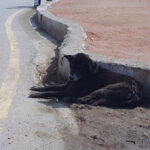


Kindness or Threats? Indian Street Dogs Learn Who They Can Trust, New Study Finds

Kindness or Threats? Indian Street Dogs Learn Who They Can Trust, New Study Finds
Researchers discover that free-ranging dogs adjust their behaviour towards individual people after repeated positive or threatening encounters.
A friendly encounter can change how a street dog responds to people, but so can a threatening one. New research from India reveals that free-ranging dogs learn from repeated interactions with humans and adjust their behaviour according to the treatment they receive. Scientists studying 54 groups of dogs found that positive encounters encouraged faster approaches, while threatening signals made dogs more hesitant and less willing to approach. Interestingly, the animals did not respond to every unfamiliar person in exactly the same way. The findings suggest that street dogs are careful observers of human behaviour, learning when to approach and when to keep their distance.
Life Among Humans
Millions of free-ranging dogs live alongside people in towns and cities around the world. In India, these animals are a familiar part of everyday life, sharing streets, markets and residential areas with human communities. Their survival often depends on human activities: some receive food from residents, shopkeepers or visitors, while others search for discarded food or other resources. However, human encounters are not always friendly. Dogs may experience affection, indifference, rejection or threatening behaviour, sometimes within the same neighbourhood.
Researchers from the Indian Institute of Science Education and Research Kolkata wanted to understand how these experiences influence dogs’ willingness to interact with people. Their study focused on whether street dogs learn to distinguish between individuals associated with positive experiences and those associated with threats. More specifically, the scientists wanted to know whether dogs would change their responses after repeated encounters and whether those experiences would influence their behaviour towards unfamiliar people.
Five Days of Encounters
The researchers examined 54 groups of free-ranging dogs in India, exposing them to either positive or threatening signals over five consecutive days. In the positive condition, the dogs encountered a person associated with a favourable experience, including a food reward. In the threatening condition, the experimenter displayed a threatening signal involving a stick. Throughout the experiment, the researchers recorded whether dogs approached the person, how long they took to approach and how their behaviour changed during repeated encounters.
On the sixth day, the dogs encountered an unfamiliar experimenter before being tested again with the familiar person. This final stage allowed the scientists to investigate whether experiences with one individual influenced responses to someone new. The researchers analysed the observations using statistical models designed to account for differences between dogs and groups, helping them distinguish changes associated with the experimental conditions from ordinary behavioural variation.
Friendly Experiences Changed Behaviour
Dogs repeatedly exposed to positive signals became quicker to approach the familiar experimenter. Their behaviour also became more friendly and socially engaged over successive encounters, suggesting that they were learning to associate the person with a favourable experience. However, the final published analysis did not establish a consistent increase in the proportion of dogs approaching that familiar person. This distinction matters because approaching faster is not necessarily the same as persuading more dogs to approach.
When the dogs encountered an unfamiliar experimenter on day six, those from the positive condition were more likely to approach than at the beginning of the experiment. The researchers interpreted this as evidence that positive experiences may partly influence how dogs respond to other people. Nevertheless, the dogs still showed caution, suggesting that a favourable experience with one individual does not automatically remove hesitation around strangers.
Threats Produced a Different Response
Dogs exposed to threatening signals changed their behaviour more quickly. Over repeated encounters, they became less likely to approach the familiar experimenter and generally took longer to do so. Their behaviour also shifted towards more neutral, less friendly responses. This suggests that the animals were learning to associate that particular person with an unpleasant or potentially dangerous experience, adjusting their behaviour to reduce the likelihood of another threatening encounter.
However, the effects were not identical when the dogs encountered an unfamiliar person. Although previously threatened dogs approached strangers more cautiously, the researchers did not find the same clear reduction in their willingness to approach. In other words, a dog that learned to avoid one threatening person did not necessarily avoid everyone else. This distinction may help free-ranging dogs continue obtaining food and other resources while limiting unnecessary risks in environments where human behaviour can be unpredictable.
Dogs Remember How People Treat Them
The study provides evidence that free-ranging dogs can modify their behaviour through experience. Scientists call this process operant conditioning, in which the consequences associated with behaviour influence future responses. The results also highlight the importance of learning and individual experience in dog–human relationships. Street dogs are sometimes described as either friendly or aggressive, as though those characteristics remain unchanged regardless of circumstances, but the findings suggest a more complicated picture.
A dog’s response may depend partly on its previous encounters with a particular person rather than simply reflecting a fixed personality. This ability to adjust behaviour could be especially valuable for animals living in close contact with humans who may behave very differently towards them. Learning which people are approachable and which should be avoided may help dogs navigate their surroundings more safely.
What This Means for Street-Dog Welfare
The research has potential implications for managing interactions between free-ranging dogs and human communities. Threatening an animal may make it more reluctant to approach the person responsible, but the findings do not demonstrate that intimidation produces a general avoidance of all humans. Positive interactions, meanwhile, may encourage more confident responses, although they do not eliminate caution. These observations could help inform humane approaches to street-dog management, public education and community welfare programmes.
However, the study involved dogs from particular locations in India and measured behaviour over only six days. It did not establish whether the observed changes would last for months or years, nor did it directly test large-scale dog-management programmes. Further research will therefore be needed before specific policy recommendations can be drawn from the results.
Learning to Live Together
The study adds to growing evidence that free-ranging dogs are remarkably adaptable to life alongside humans. They navigate environments in which people can represent both opportunities and dangers, and their responses are shaped not only by instinct but also by repeated experience. For communities trying to reduce conflict between people and street dogs, understanding this learning process may prove valuable.
The findings offer a reminder that dogs pay attention to how humans behave towards them. The consequences of those encounters may influence their next decision to approach, hesitate or walk away.
Scientific sources
Original research: Biffi, E., et al. (2026). Hearing shapes: the Bouba–Kiki effect in adult domestic dogs. Proceedings of the Royal Society B, 293, 20261209.
Published: 14 October 2026.Original peer-reviewed studyComplete open-access scientific paper