
Working German Shepherds Are Bolder Than Show Dogs — and Scientists Find Clues in Their DNA

Swedish researchers studying more than 23,000 dogs discover behavioural and genetic differences within one of the world’s best-known working breeds.
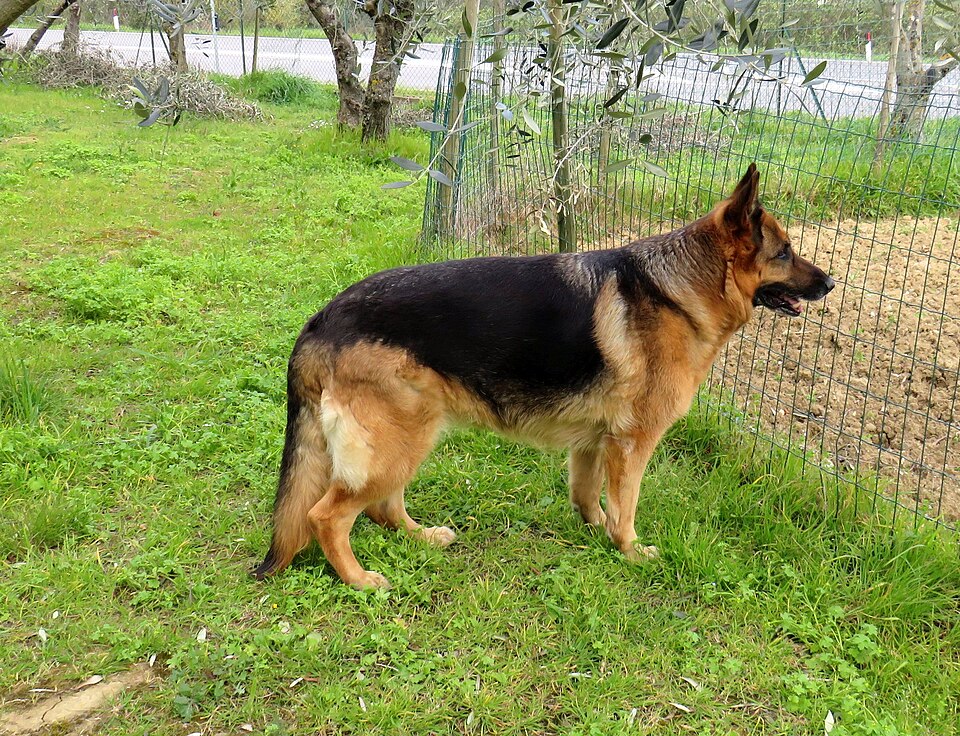
Two German Shepherd Dogs may look remarkably similar, yet respond very differently when faced with an unfamiliar person or a frightening situation. New research from Sweden suggests that some of these differences are connected to decades of selective breeding. Scientists examining behavioural records from more than 23,000 German Shepherds found that dogs bred for working roles were, on average, more playful, curious, fearless and socially interested than dogs bred primarily for the show ring. By analysing DNA from 373 of the dogs, the researchers also identified genetic regions associated with these behavioural traits, including one containing a gene previously linked to personality differences in humans. onlinelibrary.wiley.com
One Breed, Two Different Paths
German Shepherd Dogs were originally developed as versatile working animals. Their intelligence, willingness to cooperate and physical abilities have made them valuable in police work, military service, search operations and many other demanding roles.Over time, however, breeders have increasingly pursued different goals. Some have concentrated on working performance and temperament, while others have placed greater emphasis on appearance and success in dog shows.
Researchers from Uppsala University and the Swedish University of Agricultural Sciences wanted to understand whether these different breeding priorities had produced measurable changes in behaviour and genetics.Their findings show that the Swedish German Shepherd population contains two distinguishable groups, broadly corresponding to working and show lines.These groups differ not only in their behavioural assessment scores but also in parts of their genetic makeup.
Meeting Ghosts in a Behaviour Test
The study used records from Sweden’s Dog Mentality Assessment, or DMA, a standardised test designed to evaluate several aspects of canine behaviour.During the assessment, dogs encounter a series of unfamiliar situations. They may be invited to play, approached by a stranger or confronted with strange-looking figures resembling ghosts.Researchers observe how each dog responds, recording characteristics such as curiosity, fearfulness, sociability and willingness to engage in play.The scientists analysed assessment data from 23,109 German Shepherds.
Working-line dogs generally received higher scores for a collection of traits described by the researchers as boldness.In this context, boldness does not mean aggression. It describes a tendency towards confidence, curiosity, playfulness and social engagement rather than avoidance or hesitation.The researchers found that working dogs were, on average, more willing to investigate unfamiliar situations and interact with people.These are potentially valuable characteristics for dogs expected to work in challenging environments. Uppsala University
What the DNA Revealed
The team then examined genetic information from 373 German Shepherds that had undergone the behavioural assessment.Using genome-wide association analysis, the researchers searched for genetic variations linked to differences in temperament.They identified several regions associated with behavioural characteristics, including playfulness, sociability and boldness.
One particularly interesting region was found on canine chromosome 1, near a gene called TCF4.In humans, variations involving TCF4 have previously been associated with neuroticism and several neurological or psychiatric conditions.The researchers also identified other candidate regions containing genes involved in nervous-system development and function.
These findings suggest that some biological processes influencing temperament may have similarities across species.However, identifying an association does not prove that a particular genetic variation directly causes a specific behaviour.Personality is complex, and individual genes generally contribute only part of the overall picture. onlinelibrary.wiley.com
Why Breeding Choices Matter
The study provides evidence that selective breeding within a single breed can influence behavioural traits over generations.Breeders selecting dogs that enjoy working, readily explore new environments and respond confidently to unfamiliar situations may gradually increase the frequency of genetic variations associated with those characteristics.
Meanwhile, breeding programmes focused mainly on appearance may place less emphasis on the same behavioural qualities.The researchers stress that this does not mean every working-line German Shepherd is confident or that every show-line dog is fearful.Individual differences remain substantial, and training, socialisation, health and life experiences all influence behaviour.Nevertheless, the population-level differences demonstrate that breeding priorities can have consequences beyond physical appearance.
Could Genetics Help Select Future Working Dogs?
Finding suitable dogs for demanding professional roles can be difficult and expensive.Police, military and other working-dog organisations invest considerable time in breeding, raising, training and evaluating potential recruits.A better understanding of behavioural genetics could eventually help breeders make more informed decisions.
However, the researchers caution that their findings are only an early step towards that goal.The genetic analysis involved 373 dogs, a relatively modest sample for studying complex traits influenced by many genes.The study also examined numerous behavioural characteristics and genetic markers, making independent confirmation particularly important.
Researchers are planning larger investigations in collaboration with the Swedish Armed Forces.Future studies may help determine whether genetic information can usefully complement behavioural assessments when selecting working dogs.
A Connection to Human Personality?
Another intriguing aspect of the research is the relationship between some canine genetic regions and those previously associated with human personality traits.The scientists found signals near genes involved in neurological development, including genes linked in human studies to neuroticism.This does not mean that dogs and humans experience personality or emotion in exactly the same way.
It does, however, suggest that studying dogs may provide additional clues about the biological foundations of behaviour across mammals.Because domestic dogs have experienced intensive selective breeding, they offer researchers an unusual opportunity to examine how genetic differences relate to behavioural characteristics.
More Than Appearance
The findings add an important dimension to discussions about responsible dog breeding.Physical health remains essential, but temperament and behavioural suitability also deserve attention.A confident working dog may be well suited to a demanding professional role, while another dog with a quieter personality may thrive in a different environment.
Neither should be judged solely by appearance or ancestry.The Swedish research demonstrates how breeding decisions can gradually influence both the bodies and the behaviour of dogs.For breeders, trainers and future owners, the message is that understanding a dog’s temperament is every bit as important as understanding how it looks.
sources
Original peer-reviewed research
Marinescu, V. D., et al. (2026). The Genetic Architecture of Behavior in the German Shepherd Dog. Animal Genetics, 57(6), e70221. Published 10 November 2026.
DOI: 10.1002/age.70221.Read the original open-access research paper
The original paper was examined directly, including its methods, sample sizes, genetic associations, limitations, funding and declaration of no conflicts of interest. onlinelibrary.wiley.com
Uppsala University — 12 November 2026
Curiosity and fearlessness apparent in German Shepherd genes.Read the university’s research announcement
The university confirms the research findings and explains the planned collaboration with the Swedish Armed Forces. Uppsala University