

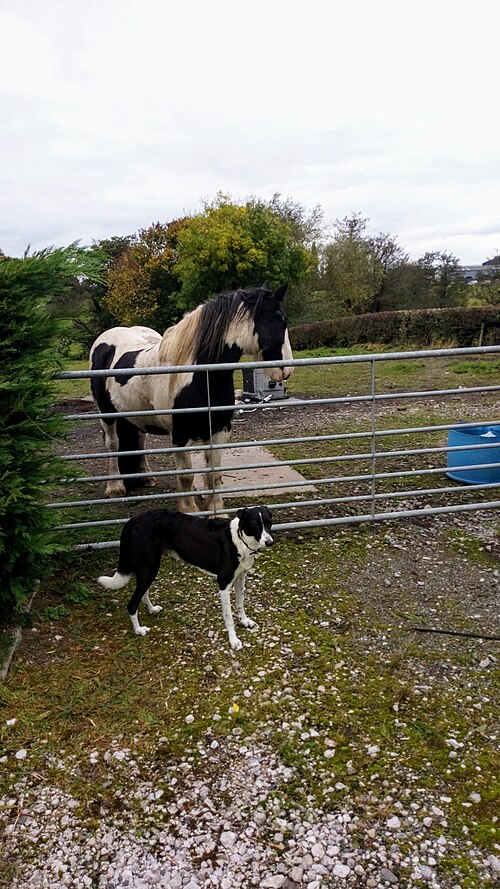
Horse-to-Dog Gut Transplant Shows Promise Against Chronic Digestive Disease

Italian researchers report improvement in 16 of 20 dogs after an experimental treatment using intestinal microorganisms from a healthy horse, but larger controlled trials are needed.
Could a horse help treat a dog suffering from long-term digestive problems? Researchers in Italy have tested an unusual approach involving the transfer of intestinal microorganisms from a healthy horse to dogs with chronic intestinal disease. In a study involving 20 dogs, 16 showed a positive clinical response approximately one year after treatment, while 13 reached clinical remission. The results suggest a possible new direction for veterinary medicine, although the small, uncontrolled study cannot establish that the treatment itself caused the improvements. frontiersin.org
When Digestive Problems Refuse to Disappear
Chronic enteropathy is a broad term for long-lasting intestinal disease in dogs. Affected animals may experience repeated diarrhoea, vomiting, weight loss or changes in appetite. Some improve after switching to a specially formulated diet, while others require additional veterinary treatment.
Scientists have increasingly recognised that the intestinal microbiome — the community of bacteria and other microorganisms living in the digestive tract — may play an important role in these conditions.
When the normal balance of microorganisms becomes disturbed, a condition called dysbiosis, digestion and intestinal health may suffer. Researchers are therefore investigating whether restoring a healthier microbial community could help dogs whose symptoms remain difficult to control.
An Unexpected Donor: A Horse
The Italian team, involving researchers from the universities of Bologna and Teramo and a veterinary clinic in Bologna, investigated a technique called fecal microbiota transplantation, or FMT.
This procedure involves transferring carefully prepared fecal material from a healthy donor to another animal in an attempt to influence its intestinal microorganisms.
Most veterinary research has examined transfers between animals of the same species. The Italian researchers instead used material from a horse, reasoning that horses possess a particularly rich intestinal microbial community because of their plant-based diet.
A healthy donor horse was selected after veterinary assessment and parasite screening. Its fecal material was processed under a patented preparation method and given orally to the participating dogs.
The researchers enrolled 20 dogs aged between one and sixteen years. All had chronic enteropathy and had previously undergone dietary trials. Each received one administration, with their existing diets maintained during follow-up. frontiersin.org
Encouraging Results After One Year
The dogs were assessed before treatment, after 30 days and approximately one year later. Researchers used a recognised clinical scoring system to measure digestive symptoms and disease severity.
After 30 days, 13 of the 20 dogs had shown a positive response. At the longer follow-up, the researchers classified 16 dogs, or 80%, as long-term responders.
Most importantly, 13 dogs, representing 65% of the original group, had reached clinical remission according to the study’s scoring criteria.
The results were not identical for every animal. Eight of nine dogs with initially mild disease responded over the longer term, compared with seven of nine dogs with moderate disease. Only one of the two dogs with severe disease showed a favourable long-term response.
These differences suggest that the approach may not work equally well for every patient. frontiersin.org
What Happened Inside the Dogs’ Intestines?
The researchers also examined bacterial DNA in fecal samples to investigate changes in the dogs’ intestinal microbiomes.
Before treatment, the affected dogs had less diverse microbial communities than healthy reference dogs. They also showed reduced levels of several bacterial groups associated with normal intestinal function.
Following treatment, certain potentially beneficial bacterial groups increased. However, the researchers did not find a statistically significant overall improvement in microbial diversity after 30 days.
An especially interesting finding was that relatively few microorganisms originating from the horse appeared to persist in the dogs.
The scientists suggest that the transplanted material may have stimulated microorganisms already living in the dogs’ intestines rather than permanently replacing them with horse-derived bacteria.
This remains a hypothesis. The researchers could not determine precisely which components of the treatment were responsible for the observed changes. frontiersin.org
Why Caution Is Essential
Although the results are promising, this was a small study without an untreated or placebo-treated control group. The healthy reference dogs used for microbiome comparisons were not a clinical treatment control group.
Consequently, improvements cannot confidently be attributed to the transplantation. Other influences, including the dogs’ ongoing dietary management and natural changes in their conditions, cannot be completely excluded.
The study also involved a patented treatment procedure. Two authors disclosed positions on the board of Microbiome Analytics, a company associated with the research. These interests are relevant when assessing the findings, although they do not automatically invalidate the results.
The researchers reported institutional ethical approval and informed consent from the participating dogs’ owners. They also acknowledged the need for larger investigations to confirm the findings. frontiersin.org
What This Means for Dog Owners
The study does not mean that owners should encourage their dogs to eat horse manure. Unscreened fecal material may contain parasites, harmful microorganisms or other substances that could make animals ill.
The experimental treatment involved a selected donor, screening, controlled preparation and veterinary oversight. It should not be confused with ordinary manure consumption or regarded as an established treatment for chronic digestive disease.
For owners dealing with persistent diarrhoea or other intestinal problems, veterinary diagnosis and evidence-based treatment remain essential.
Nevertheless, the findings open an intriguing possibility. Rather than simply adding new bacteria to an unhealthy intestine, future treatments might help restore the activity of microorganisms already present.
Whether horse-derived microbiota can safely and reliably achieve that goal will require independent, controlled clinical trials.
For now, the Italian research offers an unusual example of how studying relationships between different animal species may lead scientists toward new ways of treating disease.
source
Scicchitano, D., Palladino, G., D’Amico, F., Turroni, S., Vignoli, M., Rampelli, S., Terragni, R., and Candela, M. (2026).
Cross-species horse-to-dog fecal microbiota transplantation as a novel nature-inspired therapy for non-responsive chronic enteropathy in dogs.
Frontiers in Veterinary Science, Volume 13, published 11 November 2026.
DOI: 10.3389/fvets.2026.1986705.Read the complete peer-reviewed research paper
The original paper was examined directly, including clinical results, methods, ethical approval, funding and competing-interest disclosures. The underlying sequencing data are registered in the European Nucleotide Archive as PRJEB128327. frontiersin.org