

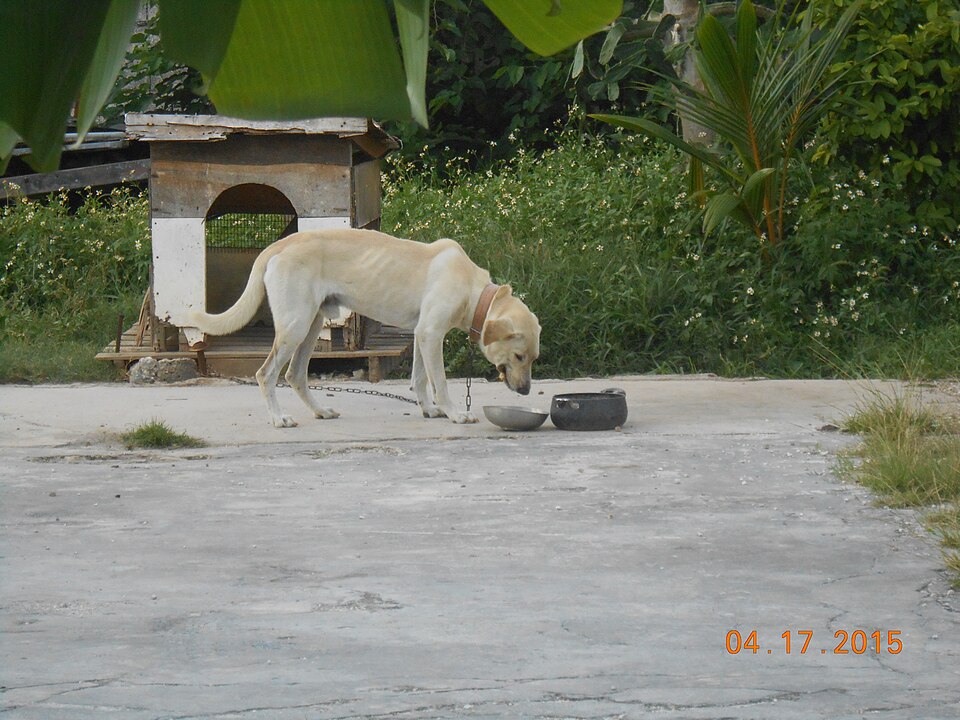
A Life on a Chain: Portuguese Veterinarians Warn of Serious Welfare Problems for Dogs

For some dogs, life consists of a few metres of ground, a chain and the same surroundings day after day. A scientific study from Portugal has revealed how frequently veterinarians encounter dogs living under these conditions—and the physical and behavioural problems they associate with prolonged restraint. Researchers surveyed 331 veterinary professionals and found widespread concerns about injuries, fearfulness, poor socialisation and restricted movement. The findings also raise an important question: should keeping a dog permanently chained become a criminal offence, or are education and better alternatives the most effective solution?
A Common Sight in Rural Areas
Dogs have traditionally been kept on chains for several reasons. Some guard farms or livestock, while others are restrained to prevent them from escaping or entering neighbouring properties.In parts of rural Europe, this remains a familiar practice.However, keeping a dog continuously attached to a chain can prevent it from exercising, exploring its surroundings and interacting normally with people and other animals.
Researchers from the University of Trás-os-Montes and Alto Douro and collaborating institutions wanted to understand how Portuguese veterinarians experience this problem.They distributed an anonymous online questionnaire asking veterinary professionals about chained dogs, their health and behaviour, and possible legal restrictions.A total of 331 professionals participated.Of these, 238—71.9%—reported encountering continuously chained dogs during their professional activities. MDPI
The Problem Extends Across Portugal
The researchers found substantial geographical differences.Among respondents working in the Azores, 90.7% reported encountering chained dogs. The corresponding figures were 87.5% in Madeira, 83.9% in central Portugal and 80% in Alentejo.In the Lisbon metropolitan area, the figure was considerably lower, at 50.6%.These percentages describe the experiences of participating veterinarians, not the proportion of dogs kept on chains in each region.
Nevertheless, the findings suggest that prolonged tethering is particularly visible in rural and agricultural environments.Municipal veterinarians and professionals working in animal shelters were especially likely to encounter affected dogs.
Physical Injuries Are Frequently Reported
The study identified several health problems associated with prolonged restraint.Among the 238 veterinarians who had encountered chained dogs, 82.4% reported observing hair loss around the restraint site.This condition, known as alopecia, can develop when collars or chains repeatedly rub against the skin.Almost half reported poor muscle condition, which they associated with insufficient exercise.
Other problems included wounds, skin infections, musculoskeletal pain and injuries caused by chains becoming tangled around an animal’s legs.Some veterinarians described particularly serious cases involving embedded collars, damaged skin and injuries to the neck.Overall, 68.9% of respondents with experience of chained dogs believed that these animals generally had poorer health than dogs that were not continuously restrained. MDPI
Behavioural Problems Raise Further Concerns
The consequences were not limited to physical injuries.Veterinarians also reported behavioural differences between chained and unchained dogs.Poor socialisation was identified by 81.9% of respondents familiar with chained dogs.Increased fearfulness was reported by 74.8%, while 62.6% reported greater aggression.These observations are important because dogs are social animals that normally require opportunities to move, investigate their environment and interact with others.Prolonged restriction may contribute to frustration and defensive behaviour, particularly when an animal cannot retreat from something frightening.
However, the study did not establish that chaining directly caused every reported behavioural problem.Some dogs may already have had behavioural difficulties before being restrained.
Why Do Owners Keep Dogs Chained?
The researchers also investigated the reasons behind the practice.Preventing dogs from escaping was the most frequently identified motivation, mentioned by 80.3% of respondents with relevant experience.Other explanations included guarding property, controlling aggressive behaviour, established local traditions and owners lacking suitable fencing.Financial limitations were another concern.For some households, building a secure enclosure may be expensive, particularly when dogs are kept on large rural properties.This creates an important challenge for animal-welfare organisations.Simply prohibiting chains without providing practical alternatives may not resolve the underlying problems.
Should Permanent Chaining Be a Crime?
The survey revealed strong support for legal intervention.Only 5.5% of respondents with experience of chained dogs opposed criminalising tethering under all circumstances.Approximately 42.9% supported making the practice a criminal offence in every case.A further 51.7% favoured criminal penalties only under particular circumstances, especially when animal welfare was demonstrably compromised.These findings suggest considerable professional concern, but they do not represent a formal position adopted by all Portuguese veterinarians.
The researchers argue that regulation should be accompanied by education and accessible alternatives.Secure fencing, suitable enclosures, regular exercise and opportunities for social interaction may help owners protect their property without keeping dogs permanently restrained.
What the Study Cannot Establish
The research has important limitations.Participation was voluntary, and the respondents were not necessarily representative of the entire Portuguese veterinary profession.The findings also relied on professional recollections and observations rather than systematic examinations of individual dogs.
Consequently, the study cannot determine the national prevalence of tethering or prove that every reported health problem was caused by restraint.Nevertheless, it provides valuable evidence about the welfare concerns veterinarians encounter in everyday practice.
A Dog Needs More Than Food and Shelter
The Portuguese study highlights an important distinction between keeping an animal alive and providing acceptable living conditions.Food, water and shelter are essential, but dogs also need movement, social contact and opportunities to express normal behaviour.For animals spending their lives at the end of a chain, these opportunities may be severely restricted.
The researchers conclude that meaningful improvements will require cooperation between veterinarians, authorities, animal-welfare organisations and owners.Their message extends far beyond Portugal.Whether a dog lives on a European farm, an American property or in a rural community elsewhere, responsible ownership involves more than preventing it from escaping.It also means giving the animal a life worth living.
Primary Scientific Sources
1. Original peer-reviewed research — Published 17 May 2026
Leonardo, A., Files, R., Pereira, G. da G., & Pires, I. (2026).
Chained Lives: Veterinary Perceptions of Dog Tethering and Their Implications for Regulatory and Criminal Frameworks in Portugal.
Forensic Sciences, 6(2), Article 40.
DOI: 10.3390/forensicsci6020040
Read the complete original scientific paper
The publication is open access under Creative Commons Attribution 4.0.
2. Portuguese Scientific Repository
The research is also available through Portugal’s academic repository network, with an institutional record and downloadable publication.
Access the Portuguese institutional research record
Scientific assessment: This is peer-reviewed survey research involving 331 veterinary professionals. It provides evidence about their experiences and perceptions but does not directly establish the prevalence of tethering among Portuguese dogs or demonstrate causation between restraint and individual health problems.
The authors recommend combining regulation with owner education and practical alternatives to prolonged chaining.