

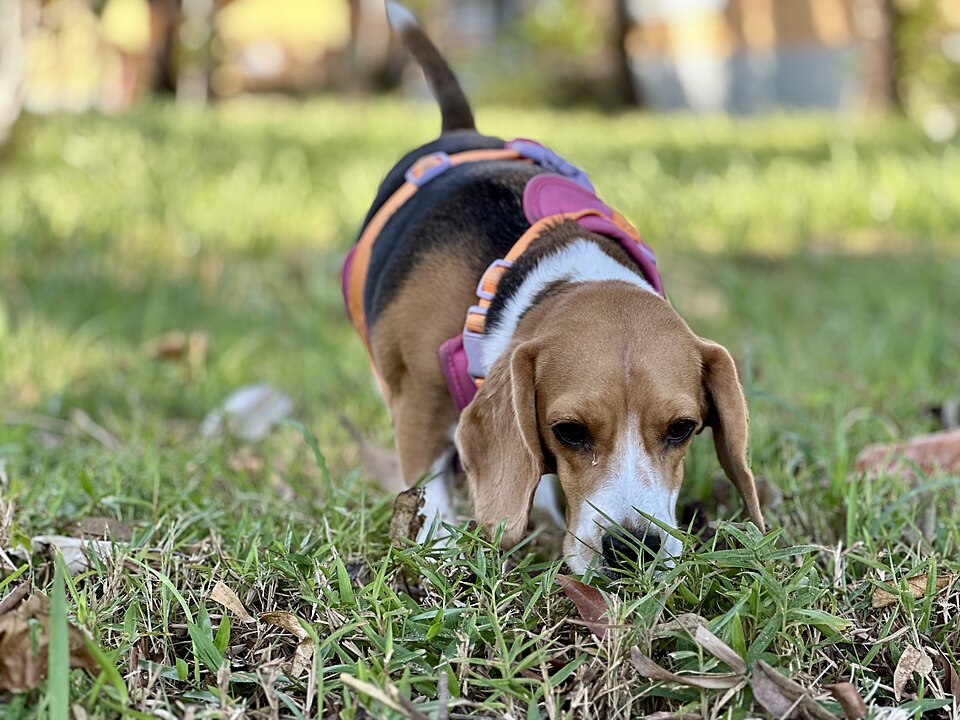
Are Dogs Optimists or Pessimists? New Review of 32 Studies Reveals Important Clues

Can dogs look at an uncertain situation and expect something good to happen? Or can difficult experiences make them expect the worst? Scientists have been investigating these questions for years, hoping to understand more about how dogs experience the world. Now, a new Italian review of 32 scientific studies suggests that training methods, activities and living conditions can influence dogs’ expectations. However, the researchers also warn that measuring canine emotions is considerably more complicated than it might appear.
How Do Scientists Measure a Dog’s Mood?
Dogs cannot tell us whether they feel happy, worried or frustrated. Instead, researchers study their behaviour, physical reactions and responses to different situations. One approach involves something called a judgment bias test. The idea comes from human psychology. People experiencing positive emotions often interpret uncertain situations more favourably, while anxiety or negative experiences can encourage less optimistic expectations. Scientists have adapted this principle to investigate animal emotions.
In a typical experiment, a dog learns that a bowl placed in one location contains food, while a bowl in another location is empty. Once the dog understands the difference, researchers place a bowl somewhere between the two familiar positions. Will the dog approach quickly, apparently expecting a reward? Or will it hesitate, perhaps expecting disappointment? Researchers interpret these responses as possible signs of optimistic or pessimistic expectations.
Thirty-Two Studies Examined
The new review was conducted by researchers from the University of Pisa and University of Rome Tor Vergata. Published on 23 October 2026, it examined 32 peer-reviewed studies involving domestic dogs. Fifteen were experimental studies, thirteen were observational or quasi-experimental investigations, and four focused on research methods.
The researchers identified five different testing approaches. However, 28 of the 32 studies used variations of the bowl-location experiment. This concentration revealed an important problem: scientists frequently use similar tests, but they do not always conduct or analyse them in the same way. That makes comparisons difficult and prevents researchers from combining all the findings into one reliable overall result.
Training Methods May Influence Expectations
Some of the most interesting findings concerned dog training. The review examined research comparing dogs trained mainly through rewards with dogs exposed to methods involving unpleasant consequences, such as physical corrections or intimidation. In one study involving 92 dogs, animals trained with aversive methods showed more stress-related behaviour, higher levels of the stress hormone cortisol and more pessimistic responses during judgment bias testing.
Another investigation involving 100 dogs found that animals whose owners used multiple aversive training methods approached uncertain locations more slowly. These findings suggest a relationship between training experiences and emotional welfare. However, the Italian researchers emphasise that observational studies cannot establish cause and effect on their own. Other differences between dogs, their owners and their environments may also influence the results.
Sniffing Activities Could Make a Difference
The review also highlighted research suggesting that activities allowing dogs to use their natural abilities may improve their emotional experiences. One experiment compared two groups of pet dogs. Ten dogs received two weeks of nosework training, involving activities that encouraged them to search using their sense of smell. Another ten received heelwork training. Afterwards, the nosework group approached uncertain locations more quickly, suggesting a shift towards more optimistic expectations. The difference was statistically significant.
Other studies found that additional positive human interaction could improve responses among fearful shelter dogs. However, not every enrichment experiment produced the expected results. Some interventions showed no measurable effect, while others produced different responses depending on the dogs involved.The findings therefore support further investigation rather than proving that any particular activity automatically makes every dog happier.
Why the Tests Are Not Yet Reliable Enough
Perhaps the most important conclusion concerns the tests themselves. A dog approaching an uncertain bowl slowly might be experiencing negative emotions. But it might also be less interested in food, slower at running or less confident about remembering the correct location. Researchers discovered that these factors can influence test results.One investigation involving 15 dogs repeated the same procedure across five sessions.
Although nothing was deliberately done to change the animals’ emotional states, their responses became progressively more pessimistic.That raises a serious question about whether the test consistently measures the same underlying emotion.Other studies found that differences between shelter dogs and family pets sometimes disappeared when researchers accounted for individual running speeds.The Italian team concluded that judgment bias testing remains promising but is not sufficiently reliable to serve as a routine welfare assessment on its own.
What Does This Mean for Dog Owners?
The findings reinforce the importance of considering dogs’ emotional experiences alongside their physical health.Food, shelter and veterinary treatment are essential, but welfare also involves opportunities for positive experiences.Activities such as exploring, sniffing, playing and interacting with people may contribute to a dog’s quality of life.Nevertheless, owners should not interpret hesitation during a game or training exercise as proof that their dog is unhappy.A dog’s behaviour must be understood within its wider circumstances, including health, personality, previous experiences and environment.
Understanding the Dog Behind the Behaviour
The researchers recommend developing standardised testing methods and combining judgment bias experiments with other measures, including behaviour observations and physiological indicators.Larger studies and repeated testing will also be needed.For now, science cannot provide a simple test that tells owners exactly how optimistic or pessimistic their dogs are.
But the research points towards an important principle: understanding canine welfare means looking beyond what dogs do and investigating how they may experience the world around them.That could eventually improve training, shelter management and the everyday lives of millions of dogs.
Primary Scientific Sources
1. Original peer-reviewed systematic review — Published 23 October 2026
Gazzano, V., Ciurli, L., Curadi, M. C., Baragli, P., Gazzano, A., & Ogi, A. (2026).
Assessing affective states in domestic dogs through judgment bias tasks: a systematic review of methods, influencing factors, and welfare applications.
Frontiers in Veterinary Science, Volume 13, Article 1926433.
DOI: 10.3389/fvets.2026.1926433
Read the complete scientific review
This is an open-access publication under Creative Commons Attribution 4.0. It includes the methodology, results, references and an assessment of the reliability of previous research.
2. Original study on nosework and canine optimism
Duranton, C., & Horowitz, A. (2019).
Let me sniff! Nosework induces positive judgement bias in pet dogs.
Applied Animal Behaviour Science, 211, 61–66.
DOI: 10.1016/j.applanim.2018.12.009
Read the original nosework research
3. Original research on training methods and welfare
Vieira de Castro, A. C., et al. (2020).
Does training method matter? Evidence for the negative impact of aversive-based methods on companion dog welfare.
PLOS ONE, 15(1), e0225023.
Read the original training-method study
Scientific assessment: The new publication is a systematic review rather than a new experiment involving dogs. Its findings are based on previously published studies. The authors identify encouraging patterns but conclude that judgment bias tests require further validation before being used as dependable welfare measurements.